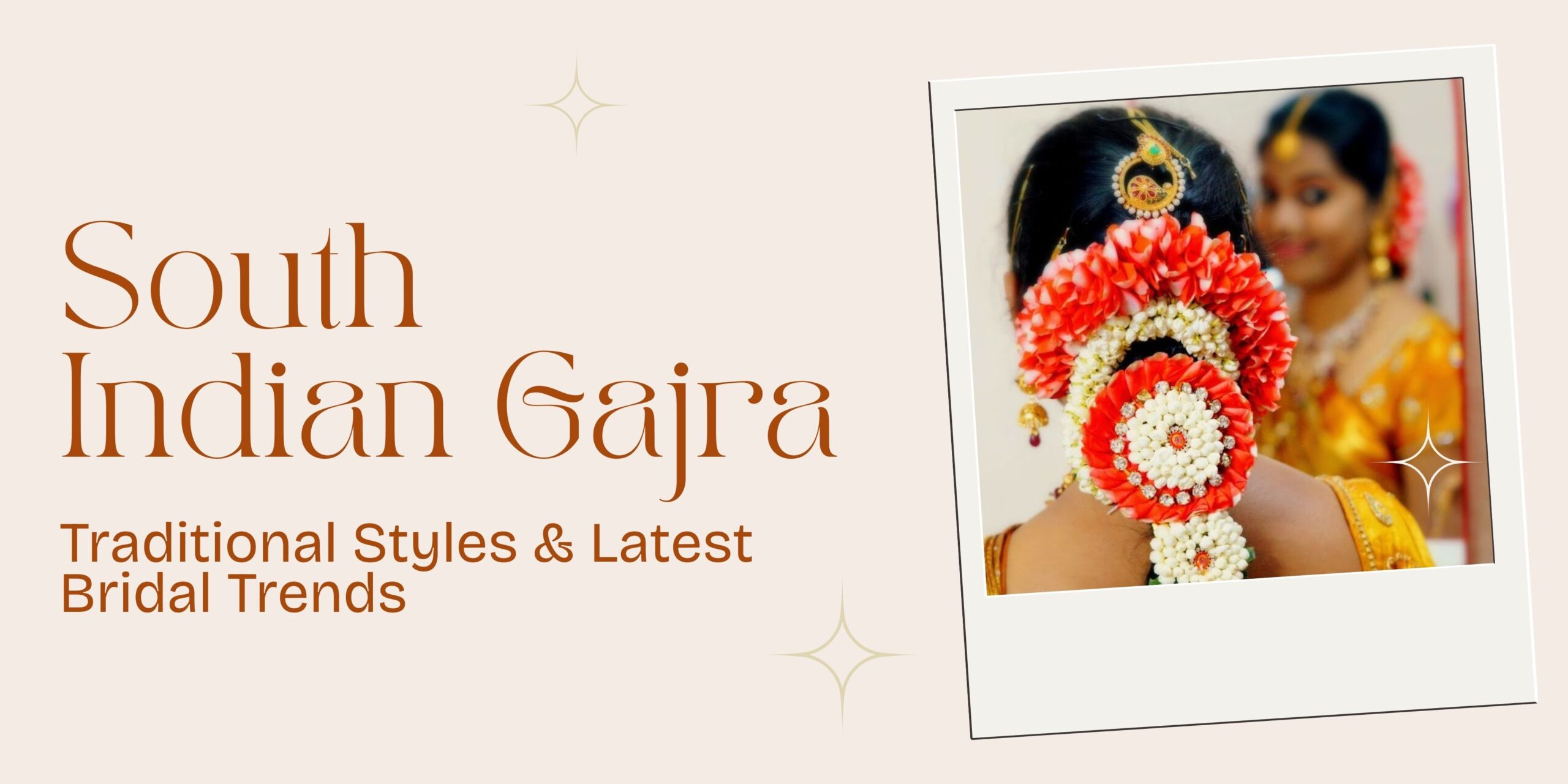
There is no fragrance quite as nostalgic or deeply tied to a wedding day as the rich, sweet scent of fresh mallepulu (jasmine). For generations, the south indian gajra has been the crowning glory of a bride’s attire, perfectly complementing the heavy gold jewelry and vibrant silk sarees of traditional ceremonies.
But as we dive deeper into the 2026 wedding season, the way brides wear their flowers is changing. At Vizag Pelli Poola Jada, our styling team has spent years handcrafting intricate floral hairpieces for brides across the coast. We’ve watched the trend shift from simple, heavy strands of jasmine to structured, lightweight, and highly customized floral art.
Whether you are wearing a classic temple braid or a modern messy bun for your reception, choosing the right floral accessory is crucial. Here is an insider’s guide to the latest traditional styles and modern trends in bridal hair florals.
The Evolution of the Bridal Gajra
A standard bridal gajra is typically a flexible string of flowers wrapped around a bun or pinned across a braid. However, the modern South Indian bride is increasingly opting for the gajra veni.
Unlike a standard string, a veni is a tightly woven, structured floral piece shaped like a crescent moon (for buns) or a ring. It sits flush against the hair, offering a much cleaner, more regal silhouette that stays perfectly in place, even if you are moving around the mandap for hours.
Top Gajra Veni Styles Dominating This Year
Based on the hundreds of custom orders leaving our Vizag workshop this season, here are the top three trends:
1. The Classic Jasmine & Rose Crescent
This is the ultimate traditional look. We tightly weave fresh jasmine buds with alternating layers of deep red or bright pink rose petals.
- The Expert Insight: We specifically use tightly closed jasmine buds rather than fully bloomed flowers for morning Muhurthams. Why? Because over a 4 to 6-hour ceremony, the buds slowly open, keeping the veni looking fresh rather than wilting halfway through the rituals.
2. The Pastel Carnation Veni
Pastels are no longer just for North Indian lehengas. South Indian brides wearing soft peach, mint green, or lavender Kanjeevarams are asking for matching florals.
- The Expert Insight: We use baby carnations and baby’s breath to craft these. Carnations are incredibly resilient to the humid Vizag weather, easily lasting 8+ hours without browning at the edges.
3. The Golden Tissue & Orchid Fusion
For evening receptions, brides want something that pops under the harsh stage lighting. We weave vibrant purple or white Thai orchids with accents of golden tissue fabric.
- The Expert Insight: Orchids are practically indestructible compared to traditional local blooms. A standard orchid veni weighs less than 100 grams, making it incredibly comfortable for a long night of dancing.
Gajra Strings vs. Gajra Veni: What’s the Difference?
If you are torn between wrapping simple strings or wearing a structured veni, here is a quick comparison to help you decide with your makeup artist:
| Feature | Simple Gajra Strings | Structured Gajra Veni |
| Shape & Structure | Loose, flexible, follows the hair shape. | Rigid, pre-shaped (crescent or round). |
| Best Hairstyle | Long, thick braids or loose messy buns. | Sleek, tight bridal buns (traditional). |
| Pins Required | Needs 10-15 bobby pins to secure safely. | Needs only 4-6 strong U-pins. |
| Weight | Varies heavily (often 150g – 300g). | Lightweight and balanced (50g – 120g). |
| Longevity | Medium (Petals can get crushed easily). | High (Tightly packed weaving protects petals). |
3 Steps to Keep Your Florals Fresh in Coastal Weather
Our biggest challenge on the coast is the humidity. If your florals are being delivered the night before your early morning Muhurtham, follow these exact steps to keep them crisp:
- Skip the Kitchen Fridge: Do not put your jasmine veni in a standard refrigerator. The temperature drops too low and will “burn” the delicate petals, turning them black within hours.
- The Damp Cloth Method: Lightly mist a clean cotton cloth with water (it should be barely damp, not dripping). Wrap the veni gently in the cloth.
- AC Room Storage: Place the wrapped florals in a cardboard box or a wide plastic container (leave the lid slightly open for airflow) and keep it in a cool, dark room with the air conditioning running at around 22°C.
Final Thoughts
Your wedding hair is the canvas, and your south indian gajra is the masterpiece that brings the whole traditional look together. Whether you are leaning towards the timeless scent of jasmine or a modern pastel carnation piece, the right floral accessory will elevate your bridal portraits entirely.
Don’t leave your hair florals as a last-minute afterthought. Reach out to the styling team at Vizag Pelli Poola Jada today, and let’s design a stunning, custom gajra veni that perfectly matches your bridal vision!
Frequently Asked Questions (FAQs)
1. How long does a fresh jasmine gajra veni last?
A well-woven fresh jasmine veni will look its best for about 6 to 8 hours. If you are having a morning ceremony followed by an evening reception, we highly recommend ordering a second, fresh piece for the evening.
2. How far in advance should I order my bridal hair florals?
Please finalize your floral order at least 2 weeks before the wedding. This gives our weavers time to source the exact color-matching roses or exotic orchids required for your specific saree.
3. Are artificial gajras a good idea for the main wedding?
While premium artificial venis are great for pre-wedding shoots or destination weddings, we always recommend fresh flowers for the main Muhurtham. The natural fragrance is a key sensory part of the traditional ceremony.
4. Will a heavy veni give me a headache?
It shouldn’t! Modern venis are engineered to be lightweight. A standard crescent bun veni from our studio weighs roughly 80 to 120 grams. The key is how your hairstylist pins it—distributing the weight properly prevents tension headaches.
5. Can I customize the colors to match my saree perfectly?
Absolutely. While jasmine provides a standard white base, we use dyed daisies, colored baby’s breath, and various rose shades to perfectly match or contrast with your bridal silk.