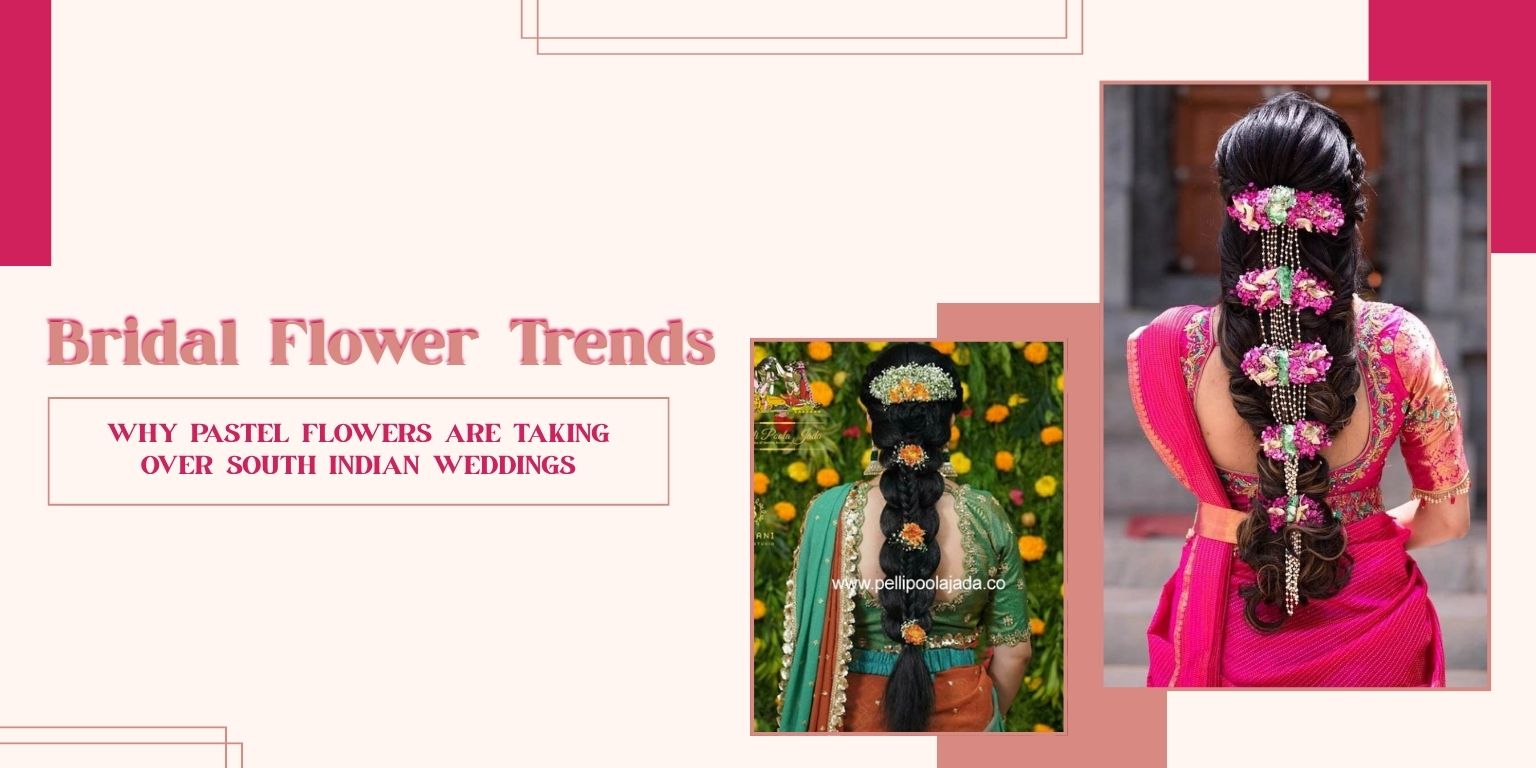
Bridal flowers have always been an important part of South Indian weddings, but the way brides are wearing them is changing. One of the biggest bridal flower trends 2026 is the shift towards softer shades, delicate combinations and more personalised floral designs. Instead of using only bright red, yellow and white flowers, many brides are choosing blush pink, peach, lavender, ivory and other muted tones for a more contemporary look.
This does not mean traditional flowers are disappearing. Jasmine, roses, chrysanthemums, tuberoses and other fresh flowers still have a special place in South Indian wedding traditions. The difference is in how they are combined.
From pastel bridal flowers in a Poola Jada to soft-toned Veni designs and elegant fresh flower wedding garlands, pastel shades can add a modern touch while keeping the bridal look rooted in tradition.
Why pastel flowers are becoming popular for South Indian brides
Pastel flowers work particularly well when a bride wants her wedding look to feel traditional without appearing overly heavy.
Soft floral shades also photograph beautifully. In natural daylight, pastel pink, peach and ivory flowers can create a softer appearance, while brighter flowers tend to create a more dramatic contrast.
There is another practical reason for the trend: pastel flowers are easy to coordinate with today’s bridal outfits.
For example:
- Blush pink flowers can complement a pink or peach Kanjeevaram saree.
- Ivory and white flowers can balance a richly coloured silk saree.
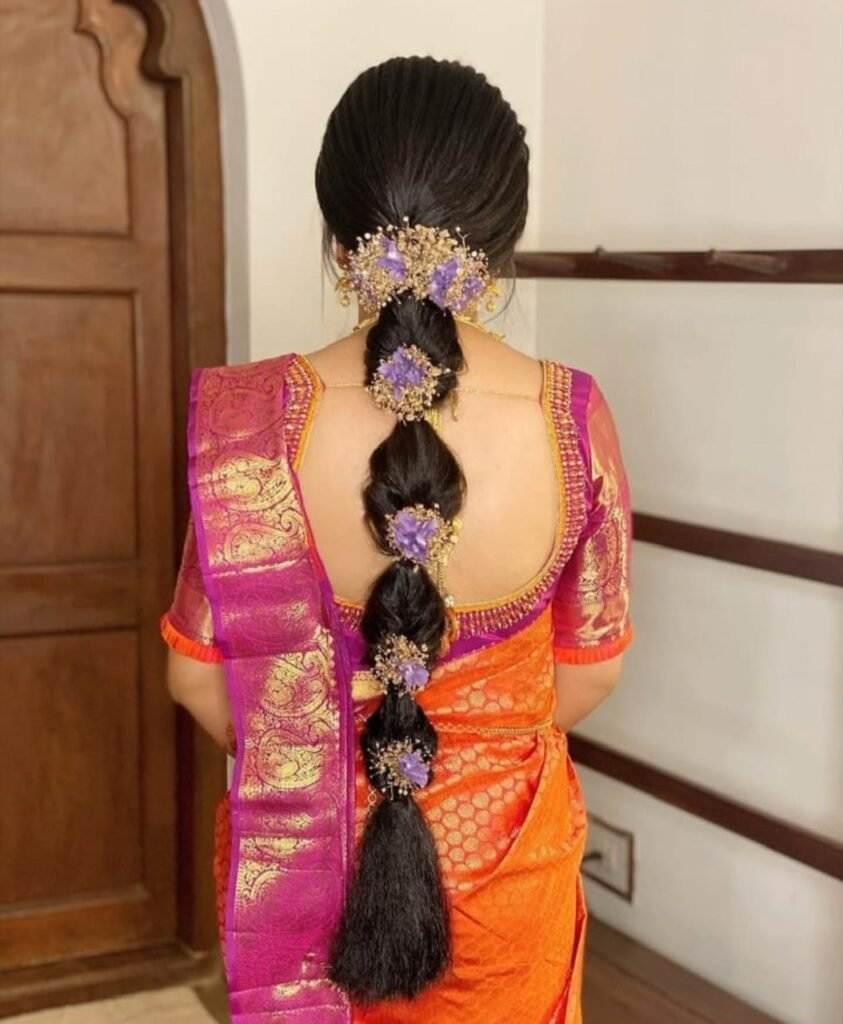
- Lavender or lilac flowers can add contrast to green or purple bridal outfits.
- Peach and cream combinations work well with gold jewellery and traditional temple jewellery.
- Soft pink and white flowers can create a delicate look for a daytime ceremony.
The key is not to match every flower exactly to the saree. A slight contrast often makes the overall look more interesting.
South Indian bridal flowers are becoming more personalised
Traditionally, bridal flowers were often selected based on availability, ceremony requirements and family preferences. Today, brides are increasingly involved in choosing the colour palette, floral arrangement and overall design.
This is especially noticeable in bridal flower jewelry.
Instead of choosing one standard floral set, a bride may select different combinations for her Poola Jada, Veni, hair accessories, bangles and garlands.
For instance, a bride wearing a pink silk saree might choose a combination of:
- White jasmine for freshness
- Blush or peach roses for colour
- Small chrysanthemums for texture
- Tuberose for additional fragrance
The result looks coordinated without making every element identical.
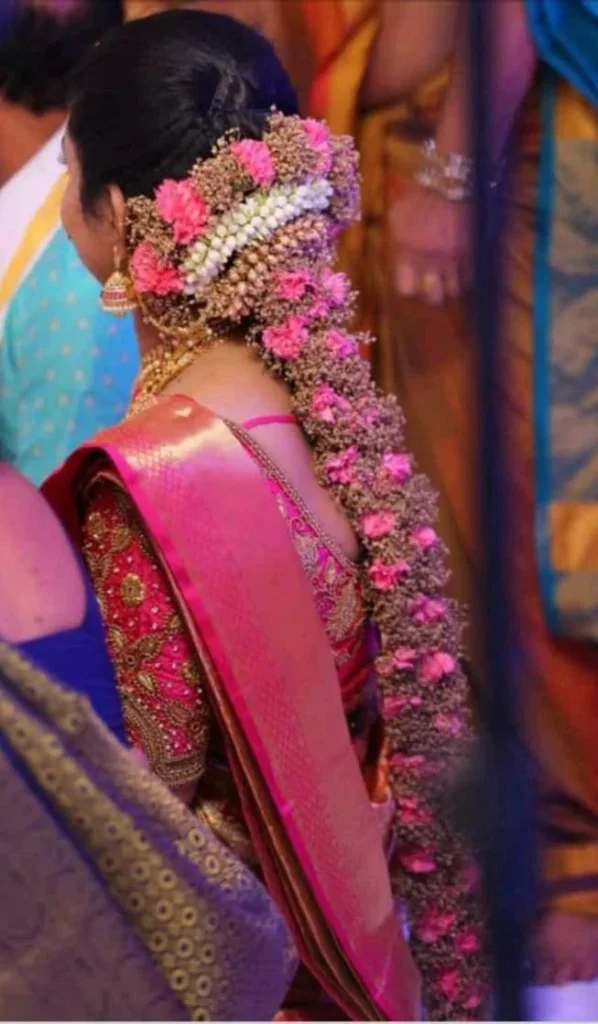
Pastel bridal flowers for Poola Jada
A Poola Jada remains one of the most recognisable floral accessories in South Indian bridal styling. The traditional braid decoration can be kept intact while experimenting with softer floral colours.
A pastel Poola Jada can include white jasmine as the base, with small peach, pink or lavender flowers arranged through the braid. The floral placement can also be kept relatively light if the bride is wearing heavy jewellery.
This is an important styling point: more flowers do not always mean a better bridal look.
If the saree, jewellery and hair accessories are already elaborate, a cleaner floral arrangement can actually make the entire look appear more balanced.
For brides who want a more traditional appearance, white jasmine can remain the dominant flower while pastel blooms are used as accents.
Also read: Types of Flowers For Bridal Hairstyle
Pastel wedding flowers and fresh garlands
The pastel trend is also influencing wedding garlands.
Large, heavily packed garlands can look beautiful for traditional ceremonies, but softer floral combinations are becoming popular among couples who want a lighter and more contemporary appearance.
A pastel garland could combine shades such as:
White + blush pink + peach
This is a simple combination that works well with both traditional silk sarees and contemporary bridal outfits.
Another option is:
Ivory + lavender + white
This can create a softer visual effect without moving too far away from the traditional use of fresh flowers.
For outdoor or daytime weddings, lighter colours can also work particularly well against natural backgrounds.
Choosing flowers based on the wedding setting
One mistake brides sometimes make is selecting flowers only by colour. The wedding venue, ceremony timing and weather should also be considered.
For a daytime wedding, lighter shades can look fresh and elegant. For an evening ceremony, slightly richer pink, peach or purple accents may provide better visual contrast.
The season matters too. Flower availability can affect both design options and pricing. A particular imported or uncommon flower may look beautiful in an inspiration photograph but may not be practical for every wedding.
Before finalising a design, ask your florist or floral designer:
- Are these flowers available on my wedding date?
- How long will they stay fresh?
- Will the flowers be suitable for the weather?
- Can a similar colour combination be created with locally available flowers?
- How much floral material is required for the complete design?
These questions can prevent last-minute changes.
How to choose the right pastel bridal flower combination
If you are unsure which combination to choose, start with your bridal outfit rather than the flower catalogue.
Look at the dominant colour of your saree and jewellery first. Then choose one main floral shade and one or two supporting colours.
For example, if your saree is deep green, you could use ivory and blush flowers to create contrast. If your saree is pink, peach and white flowers can create a softer monochromatic appearance.
It is also worth considering your hairstyle.
A heavily decorated braid may need a simpler floral arrangement, while a minimal hairstyle can carry a more detailed flower jewelry design.
What makes bridal flower jewelry look elegant?
Good floral jewellery is not simply about using expensive or unusual flowers. Proportion, freshness and placement matter just as much.
For a balanced look:
- Keep the floral colours consistent across the main accessories.
- Avoid using too many competing flower varieties.
- Consider the weight of the jewellery already being worn.
- Choose flowers that can remain fresh throughout the ceremony.
- Make sure the floral pieces complement rather than hide the bridal hairstyle.
- Take photographs of the complete outfit before finalising the design.
This is particularly useful when ordering a complete floral set. A Poola Jada, Veni, earrings, waistband or floral hair accessory may each look attractive individually but can appear too busy when combined.
Trending wedding flowers 2026: tradition with a softer look
The most interesting part of the trending wedding flowers 2026 is that the trend is not really about replacing traditional flowers. It is about styling them differently.
Jasmine remains a timeless choice for South Indian bridal hair. Roses add colour and structure, while chrysanthemums and tuberoses can add volume, texture and fragrance. By combining these familiar flowers with softer colour palettes, brides can create a look that feels both traditional and current.
That is why pastel South Indian bridal flowers are likely to remain popular beyond just one wedding season. The style is flexible enough to work with traditional ceremonies while giving brides more room to express their personal taste.
Final thoughts
Pastel flowers offer a simple way to give a traditional South Indian bridal look a modern update. Whether it is a soft Poola Jada, a delicate Veni, personalised bridal flower jewelry or elegant fresh flower wedding garlands, the right combination can make the entire bridal look feel thoughtfully put together.
At Vizag Pelli Poola Jada, floral designs can be chosen around the bride’s outfit, hairstyle, ceremony and preferred colour palette rather than relying on a one-style-fits-all approach. If you are planning your wedding and looking for fresh floral accessories or traditional Poola Jada designs, explore the available options and discuss your preferred colours and style before finalising your order.
Frequently Asked Questions
Are pastel flowers suitable for a traditional South Indian wedding?
Yes. Pastel flowers can be used without changing the traditional elements of the wedding. Jasmine, roses, tuberoses and other familiar flowers can be arranged in softer shades while keeping traditional accessories such as Poola Jada, Veni and wedding garlands.
Which pastel flowers are popular for bridal flower jewelry?
Blush roses, peach flowers, ivory blooms, white jasmine and light-coloured chrysanthemums can work well for bridal flower jewelry. The exact selection depends on flower availability, season, outfit colour and the design being created.
Can I use pastel flowers for a Poola Jada?
Yes. A pastel Poola Jada can combine traditional white jasmine with small pink, peach, lavender or ivory flowers. Keeping one colour as the dominant shade usually creates a more coordinated appearance.
Are pastel wedding flowers suitable for wedding garlands?
Yes. Pastel wedding flowers can be used for both traditional and contemporary garlands. Combinations such as white and blush pink or ivory and peach can create a softer appearance while still looking appropriate for a traditional ceremony.
How early should I book bridal flower arrangements?
It is better to finalise your floral design several weeks before the wedding, particularly if you have a specific colour combination or customised design in mind. Discuss your wedding date, ceremony timing, outfit colours and preferred flowers early so suitable flowers can be planned based on seasonal availability.