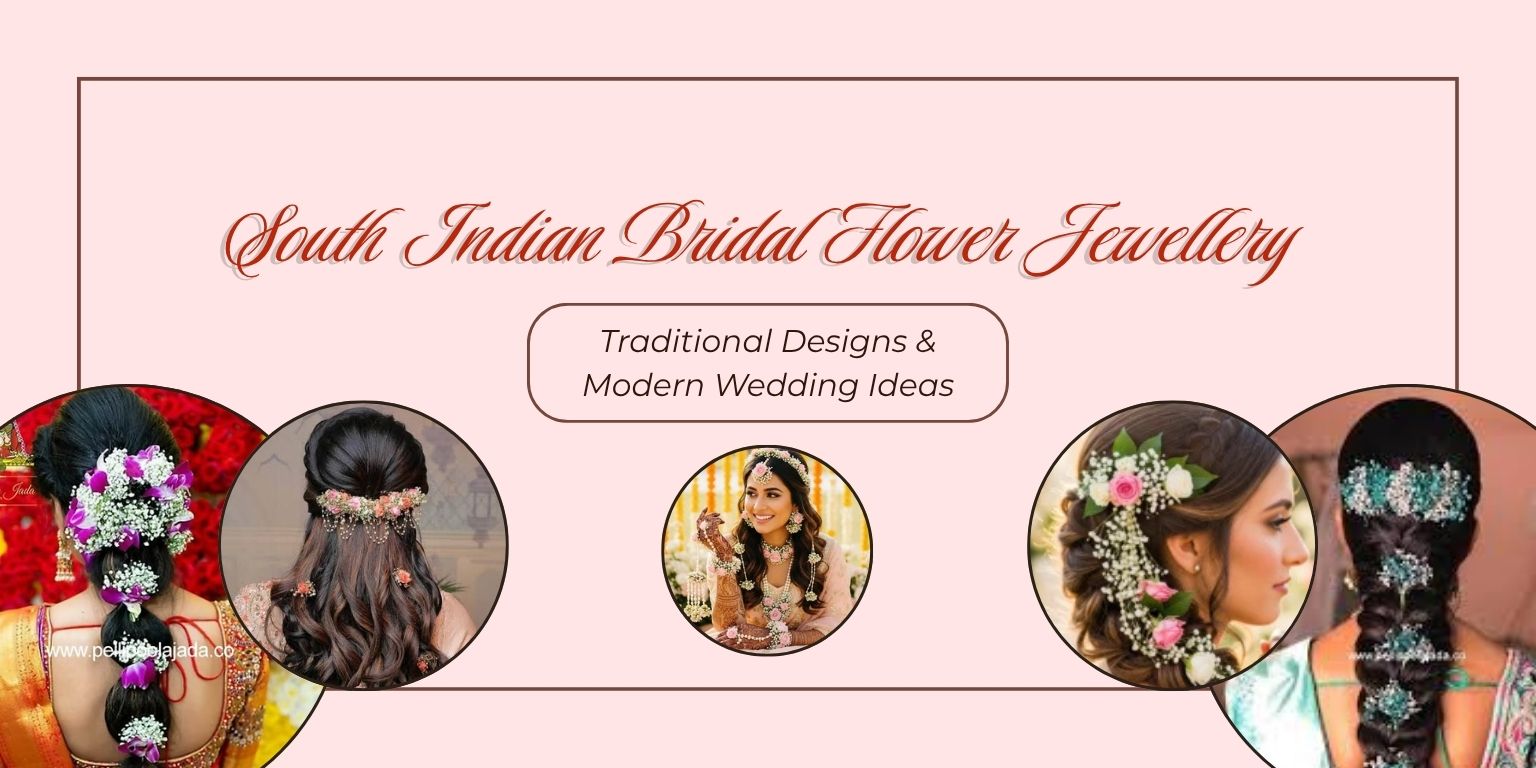
Flowers have always held a special place in South Indian weddings. From jasmine woven into a bride’s braid to floral ornaments worn with a traditional silk saree, they add colour, fragrance, and cultural significance to the bridal look. Today, South Indian bridal flower jewellery combines these timeless traditions with contemporary designs, giving brides plenty of options for their wedding ceremonies, pre-wedding celebrations, and bridal photoshoots.
Whether you prefer a classic jasmine-and-rose combination or a modern pastel floral set, choosing the right bridal flower jewellery involves more than matching colours. The flowers, hairstyle, outfit, ceremony schedule, and comfort all influence how the final look comes together.
If you are planning a wedding in Visakhapatnam or elsewhere in Andhra Pradesh, this guide explores traditional designs, modern styling ideas, and practical tips to help you choose the right floral accessories for your special day.
What Is South Indian Bridal Flower Jewellery?
South Indian bridal flower jewellery consists of decorative ornaments made using fresh flowers, floral buds, and sometimes complementary decorative elements. These accessories are designed to coordinate with the bride’s hairstyle, saree, and traditional jewellery.
Depending on the design, a bridal floral jewellery set may include:
- Floral necklaces and long harams
- Earrings and maang tikka-style ornaments
- Floral bangles and armlets
- Waist belts or vaddanam-inspired floral accessories
- Bridal hair decorations, including Poola Jada
- Floral decorations for buns and braided hairstyles
Fresh jasmine, roses, chrysanthemums, and other suitable flowers are commonly considered for these designs. The final selection depends on availability, the desired colour palette, and the style of the jewellery.
Unlike gold jewellery, floral ornaments have a softer appearance and can make a bridal outfit feel lighter and more colourful. They are particularly popular for Pellikuthuru, Haldi, Mehendi, and other pre-wedding celebrations, although some brides also choose floral hair accessories for the wedding ceremony.
Traditional South Indian Flower Jewellery Designs
Traditional designs remain popular because they complement silk sarees, temple jewellery, and classic bridal hairstyles.
Jasmine Bridal Hair Jewellery
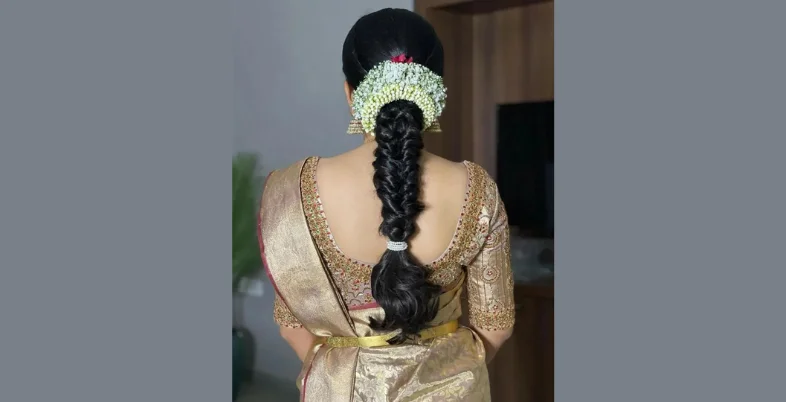
Jasmine is one of the most recognisable flowers in South Indian bridal styling. Its small white blossoms create a neat, traditional appearance when arranged along a braid or around a bun.
Jasmine can be used for simple hair garlands, elaborate Poola Jada designs, or combinations featuring roses and other flowers.
Styling tip: If your saree has a richly coloured border, white jasmine provides a clean contrast without competing with the outfit. For a long braid, ask your florist to consider the braid’s length and thickness before finalising the floral arrangement.
Rose and Jasmine Flower Jewellery
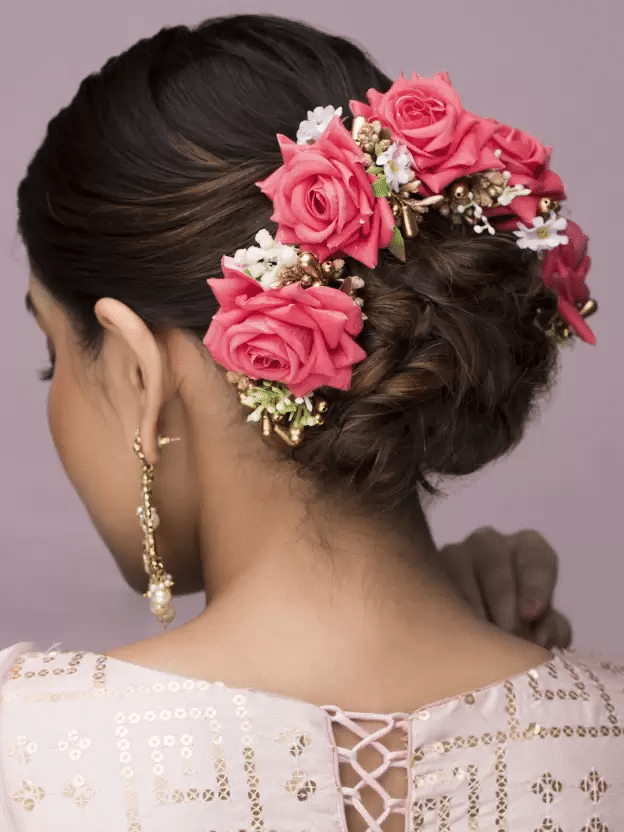
Red, pink, and white roses are popular choices for brides who want more colour in their floral accessories. A combination of roses and jasmine works especially well with red, maroon, green, and pink silk sarees.
Rose petals can also be arranged into necklaces, earrings, and matching floral bangles for a coordinated look.
For example, a bride wearing a green Kanchipuram silk saree with gold jewellery might choose red roses with white jasmine. The contrasting colours make the floral details visible in wedding photographs while maintaining a traditional appearance.
Traditional Poola Jada Designs
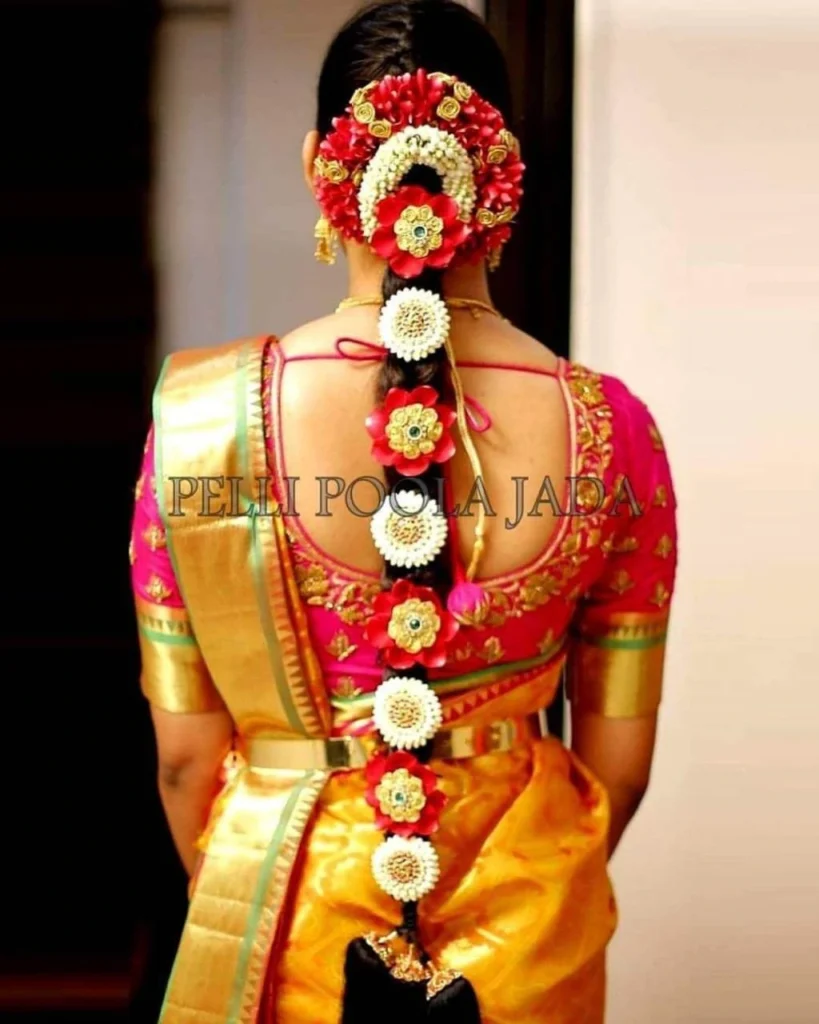
Poola Jada is a floral decoration worn along the bride’s braid. It is an important part of bridal styling in many Telugu weddings and can range from a simple jasmine arrangement to an elaborate design featuring multiple flower varieties.
Popular design elements include:
- White jasmine arranged in repeating patterns
- Red and pink roses for contrast
- Layered floral arrangements running down the braid
- Customised combinations that complement the wedding saree
The braid’s length, the bride’s natural hair volume, and the weight of the chosen decoration all affect the final result. Discuss these details before booking to ensure the design suits your hairstyle.
Choosing the right bridal flowers for hair, such as jasmine garlands or rose-adorned Poola Jada designs, helps complete the bride’s traditional South Indian wedding look while complementing her hairstyle and saree.

Modern Bridal Flower Jewellery Ideas
Modern brides are experimenting with floral colours, silhouettes, and accessories while keeping traditional elements in their wedding looks.
Pastel Flower Jewellery for Daytime Ceremonies
Pastel pink, peach, cream, and light yellow flowers create a soft appearance that works particularly well for daytime events and outdoor photoshoots.
A pastel floral necklace paired with matching earrings and a simple hairstyle can complement a lightweight saree, half-saree, or lehenga.
These designs are also suitable for brides who prefer understated accessories rather than a full traditional floral set.
Multicolour Floral Jewellery for Pre-Wedding Functions
Bright combinations of pink, orange, yellow, and white are ideal for cheerful pre-wedding celebrations. Multicolour bridal flower jewellery can coordinate with a colourful outfit without requiring every accessory to use the same flower.
For a Haldi ceremony, for example, yellow and white flowers can complement a yellow outfit. For a Mehendi function, pink and green accents may work better.
The key is to select two or three complementary colours rather than introducing too many competing shades.
Minimalist Floral Accessories
Not every bride wants a complete floral jewellery set. Minimalist designs offer a practical alternative for brides who prefer lighter accessories.
Consider these options:
- A small floral necklace with matching earrings
- A jasmine bun decoration
- A few fresh flowers attached to a braided hairstyle
- A delicate floral maang tikka
- Matching floral wrist ornaments for a pre-wedding photoshoot
Minimalist accessories are especially useful when the outfit already features heavy embroidery, elaborate jewellery, or a detailed blouse design.
How to Choose the Right Flower Jewellery for Your Wedding
The best bridal flower jewellery should look beautiful and remain comfortable throughout the event. Follow these steps when finalising your design.
Match the Flowers to Your Outfit
Start with your saree or lehenga rather than choosing flowers independently.
- Red or maroon sarees: White jasmine, red roses, or white flowers with gold-toned accents.
- Green sarees: Red roses, white jasmine, or pink floral combinations.
- Pink outfits: White, peach, or contrasting pink flowers.
- Yellow outfits: White jasmine, yellow flowers, or orange accents.
- Pastel outfits: Cream, blush pink, and other soft shades.
These are starting points rather than strict rules. The fabric, jewellery, makeup, and lighting can all influence which combination looks best.
Consider the Hairstyle
Your hairstyle determines how bridal flowers should be arranged and secured.
A long braid offers space for an elaborate Poola Jada, while a bun usually suits circular jasmine arrangements or smaller floral clusters. Half-up hairstyles may work well with a combination of loose flowers and smaller decorative pieces.
Share a reference photograph of your planned hairstyle with the florist before ordering.
Check Flower Freshness and Availability
Fresh flowers can change in appearance depending on the weather, handling, and time spent outside refrigeration. Heat and humidity can make delicate flowers wilt sooner, which is particularly relevant for outdoor weddings in coastal cities such as Visakhapatnam.
Ask the florist which flowers are available for your wedding date and how the jewellery will be stored before delivery.
Where possible, arrange delivery close to the ceremony and keep the accessories in a cool, shaded place until they are needed.
Prioritise Comfort and Secure Fitting
Heavy floral arrangements can become uncomfortable during long ceremonies. Before finalising a design, consider how long you will wear it, whether you need to change hairstyles, and how securely it can be attached.
For necklaces and bangles, ask about the base material and fitting. For hair accessories, confirm that the arrangement can be secured without pulling the hair or damaging the hairstyle.
When Should You Book Bridal Floral Jewellery?
For a wedding, it is sensible to begin discussing flower jewellery around two to four weeks beforehand, especially if you want a customised set or a saree-matched Poola Jada. Final booking timelines depend on the florist and flower availability.
A practical schedule is:
- Two to four weeks before: Shortlist designs, share outfit photographs, and discuss the budget.
- At least one week before: Confirm customised designs, measurements, colours, and delivery arrangements.
- One or two days before: Reconfirm the order and ceremony timings.
- Wedding day: Receive the fresh floral accessories close to the time they will be worn.
For highly customised designs, earlier booking is preferable. Natural flowers are perishable, so the florist should also advise when the final arrangement will be prepared.
Find Your Bridal Flower Jewellery at Vizag Pelli Poola Jada
South Indian bridal flower jewellery brings together traditional craftsmanship, natural beauty, and personal style. Whether you love the simplicity of jasmine, the richness of roses, or a modern pastel floral set, the right design should complement your outfit and remain comfortable throughout the celebration.
Planning ahead makes it easier to coordinate the flowers with your saree, hairstyle, and wedding schedule. It also gives you time to discuss flower availability and customised designs without unnecessary last-minute pressure.
If you are preparing for a wedding in Visakhapatnam, explore Vizag Pelli Poola Jada for bridal floral adornments and Poola Jada designs. Share your wedding date, outfit details, and preferred style to discuss an arrangement that suits your bridal look.
Frequently Asked Questions
1. Which flowers are best for South Indian bridal flower jewellery?
Jasmine and roses are popular choices because they offer a traditional appearance and work with many bridal outfits. Chrysanthemums and other locally available flowers can also be considered depending on the design, colour palette, and season.
2. Can bridal flower jewellery be customised to match a saree?
Yes. A floral set can be planned around the saree’s main colour, border, blouse, and existing jewellery. Share clear outfit photographs and discuss the flower varieties with the florist before confirming the design.
3. Is flower jewellery suitable for the main wedding ceremony?
It can be, depending on the bride’s preferences and family customs. Floral jewellery is especially common for pre-wedding functions, while some brides choose fresh flowers primarily for their hair during the main ceremony.
4. How can I keep fresh bridal flowers looking good for longer?
Keep the flowers cool and shaded before use, avoid unnecessary handling, and arrange delivery close to the ceremony. Ask the florist about the best storage method for the particular flowers used in your design.
5. How early should I book bridal flower jewellery in Visakhapatnam?
Start discussing designs two to four weeks before the wedding when possible. For customised Poola Jada or saree-matched jewellery, aim to confirm the order at least one week ahead, subject to the provider’s availability and requirements.